


Top 10 Health Tech Innovations Revealed At CES 2026
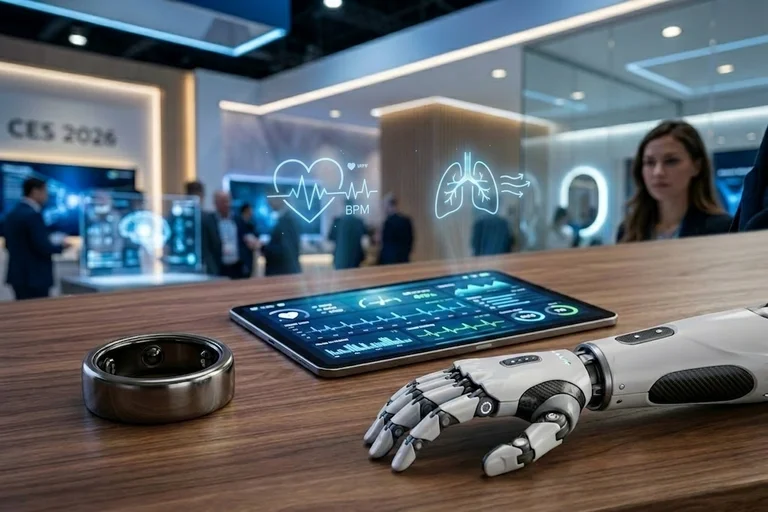
The Consumer Electronics Show (CES) 2026 in Las Vegas is one of the biggest global technology stages of the year, where health tech innovations at CES 2026 dominated the conversation alongside AI and robotics. This annual event consistently reveals the next wave of breakthroughs, but this year particularly highlighted how healthcare is evolving from simple wearables into predictive, personalized, and clinical grade solutions.
In this article, we’ll look at the top 10 health tech innovations that stood out, how they’re advancing diagnostics, and why these technologies are redefining the future of long term well being
Why CES 2026 is a Game Changer for Personal Health
CES 2026 has officially shifted the focus from simple data tracking to proactive longevity. Instead of just counting steps, new biosensing technology now interprets physiological signals to predict health risks before they become emergencies. This evolution is driven by the integration of generative AI with medical sensors, transforming standard wearables into “virtual doctors” that offer real time, actionable insights.
Remote diagnostics and predictive healthcare are coming together to make medical access more widely available. These innovations turn the home into a center for continuous health monitoring, allowing people to manage chronic conditions and mental health with near professional level accuracy. In short, CES 2026 signals a shift toward a future where your home, rather than the hospital, becomes the main hub for your overall well being.
Top 10 Health Tech Innovations to Watch in 2026
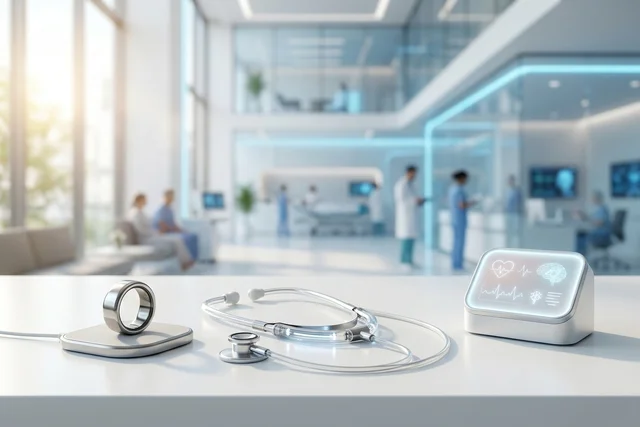
CES 2026 showcased a mix of futuristic gadgets and practical devices poised to redefine healthcare. Here’s a closer look at the top 10 innovations:
1. Withings Body Scan 2: A Proactive Longevity Hub for Home Health
One of the most talked about devices at CES 2026 is the Withings Body Scan 2, a smart scale based longevity station that measures over 60 health biomarkers, including cardiovascular health, metabolic age, nerve function, and more, all from the comfort of home. It’s designed to go beyond standard weight or BMI readings, providing insight into long‑term health risks and actionable feedback.
This reflects a clear shift in health tech: devices moving from basic tracking to predictive health analytics, giving users a more holistic view of their health trajectory.
2. NuraLogix Longevity Mirror: AI Powered Health Prediction
Another standout CES device turned health assessment into a 30‑second selfie video test. The NuraLogix Longevity Mirror uses facial blood flow analysis and AI to estimate metabolic and heart health, biological age, and other vital indicators, then connects with an app to interpret results and offer personalized wellness insights.
This mirrors a broader trend toward blending computer vision with AI analytics, enabling health evaluations without contact or lab visits.
3: Vivoo FlowPad: Real Time Hormonal Health Monitoring
Vivoo is revolutionizing women’s wellness with the FlowPad, a smart menstrual pad that tracks follicle stimulating hormone (FSH) levels. Instead of waiting for lab results, users get instant feedback on their hormonal health through integrated microfluidics and a smartphone app. This biosensing technology makes hormone monitoring accessible at home, offering a proactive way to track fertility and menopause transitions without a needle.
This innovation highlights how everyday health products are being leveraged as diagnostic tools, helping individuals understand their bodies better and make informed decisions.
4. Next Gen Smart Rings: Clinical Grade Health in a Tiny Device
Wearables continued to evolve at CES 2026, particularly smart rings that blend seamlessly into daily life while delivering clinical grade metrics. From tracking heart rate and SpO₂ to advanced sleep and stress insights, next generation smart rings are shrinking in size but expanding in analytical power.
These devices reflect a shift in wearables toward invisible tech, always on, always learning, and helping users interpret subtle patterns rather than just raw numbers.
5. Dr. Twin AI: Digital Health Twins for Predictive Care
Arguably, Dr. Twin AI is one of the most futuristic health tech innovations showcased at CES 2026. This platform creates a digital twin of a person’s health profile using genomic data and medical history. As part of the leading health tech innovations CES 2026, this AI model can predict disease risk levels, recommend intervention strategies, and continuously update insights based on new data
With health systems globally pushing toward prevention rather than reaction, tools such as digital health twins could become critical to continuous and personalized medicine.
6. Bioconnect VitalTracker: Contactless Vital Sign Monitoring
CES 2026 featured VitalTracker, a camera‑based system that uses AI to capture vital signs remotely, such as heart rate and breathing, without physical contact. This kind of technology is especially valuable for public health screening in places like airports, clinics, or remote work environments.
7. Eli Health Hormometer: Real‑Time Hormone Monitoring
For years, hormone testing meant slow lab visits and waiting days for results. However, the Eli Health Hormometer brings this clinical technology directly to your home. This device tracks vital levels affecting your mood, metabolism, and stress. Consequently, you get actionable data in real time without any delay. Furthermore, it bridges the gap between daily wellness and clinical diagnostics by offering lab grade insights in a simple, everyday setting.
8. AI Enhanced Wearable Ecosystems: Seamless Health Guidance
CES 2026 also highlights the rise of integrated health systems, going beyond individual devices. One of the key health tech innovations at CES 2026 is the emergence of AI powered wearable ecosystems. These systems analyze multiple biometric signals such as sleep patterns, heart rate variability, respiration, and stress levels and turn them into adaptive wellness coaching and personalized feedback, setting a new standard for health tech innovations at CES 2026.
This reflects an important trend: wearable technology is no longer just collecting data. It is now interpreting that data and guiding user behavior, often in real time.
9. Allergy & Food Safety Detection Devices: Preventive Daily Health Tech
Digital allergy detectors gained major attention at CES 2026 by providing instant food allergy testing at restaurants or at home. These portable devices analyze small food samples and detect traces of allergens such as gluten or lactose, allowing users to eat with greater confidence and reduced risk.
Tools like these, which are standout health tech innovations at CES 2026, point to a future where the focus isn’t just managing health issues but preventing them proactively
10. AI Predictive Platforms: The Future of Diagnostics
Underlying almost every innovation at CES 2026 is AI integration, whether for sleep prediction, longevity analytics, hormone tracking, or early disease detection. AI driven platforms are now becoming core to health technology, turning raw biometrics into predictive health narratives that can steer lifestyle, diet, treatment plans, and professional care choices.
This signifies a drastic shift from traditional tech, where gadgets tracked data, to intelligent systems that interpret it and guide next steps.
Why These Innovations Matter
CES has historically been a predictor of future tech adoption, not just a showcase of prototypes. In 2026, health tech innovations reveal a convergence of AI, sensors, wearables, and everyday wellness tools that straddle the line between consumer convenience and clinical value. From longevity stations at home to AI‑predicted health twins and contactless vital monitoring, these technologies push the boundaries of what health tracking and preventive care look like in real life.
Together, these innovations present a vision of health technology that is:
- Preventive rather than reactive
- Personalized rather than generic
- Seamlessly integrated into everyday life
- Focused on empowering individuals with actionable insights
CES this year is not just about showcasing impressive gadgets. It highlights a future where health technology becomes a natural part of everyday life, guides people before health problems get worse, and makes advanced medical insights available beyond hospital walls.
The Health Tech Innovations CES 2026 revealed a massive shift in wellness and diagnostics. In fact, these tools prove that healthcare no longer stays inside a clinic. Instead, it is now integrated into our homes and daily routines.
From longevity scans to AI powered diagnostics, these gadgets are reshaping how we live. Furthermore, they help us stay ahead of health challenges more effectively. They are not just cool tech. Indeed, they are essential tools for a longer, healthier life.
In summary, the future of medicine is becoming more proactive and personalized. Therefore, we are moving toward a world where constant care is the norm for everyone. This era of predictive healthcare is just getting started.
Read more related articles: 8 Smart Ways AI Can Support Your Parenting Journey
FAQs
Q1. What were the biggest Hhealth tech innovationsat CES 2026?
Ans. The main highlights included AI longevity mirrors and smart clinical-grade scales. Additionally, we saw a huge rise in home based hormone testing and robotic rehabilitation chairs.
Q2. Are these health gadgets available for purchase now?
Ans. Some devices like the Withings Body Scan 2 are already hitting the market. However, other futuristic tech, like the pediatric exoskeletons, might take longer to reach consumers.
Q3. Can these AI tools replace my regular doctor?
Ans. No, they are not a replacement for professional medical advice. Instead, they act as a support system. They provide your doctor with better data for more accurate treatments.